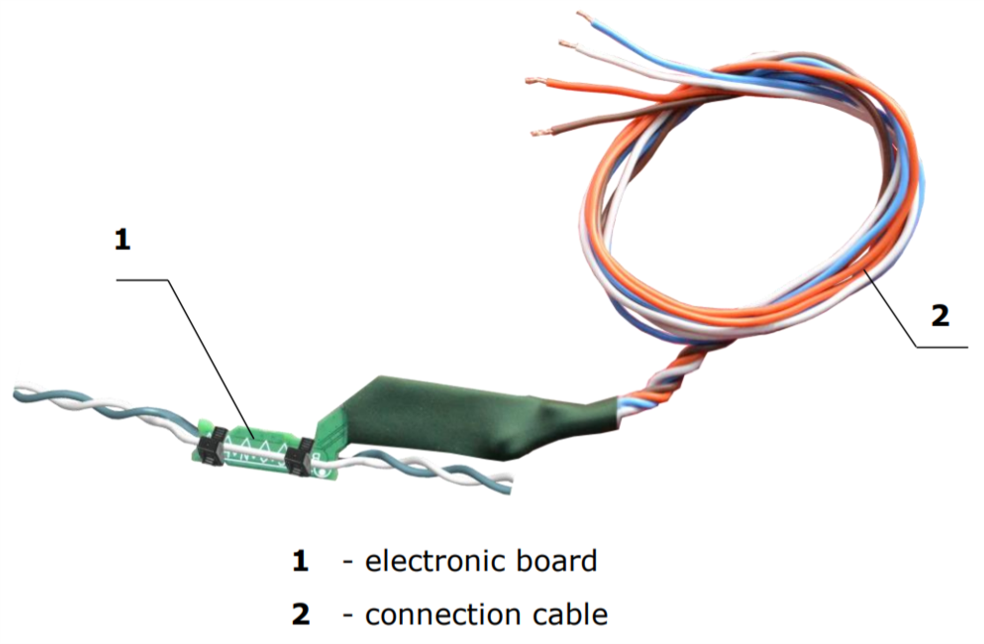
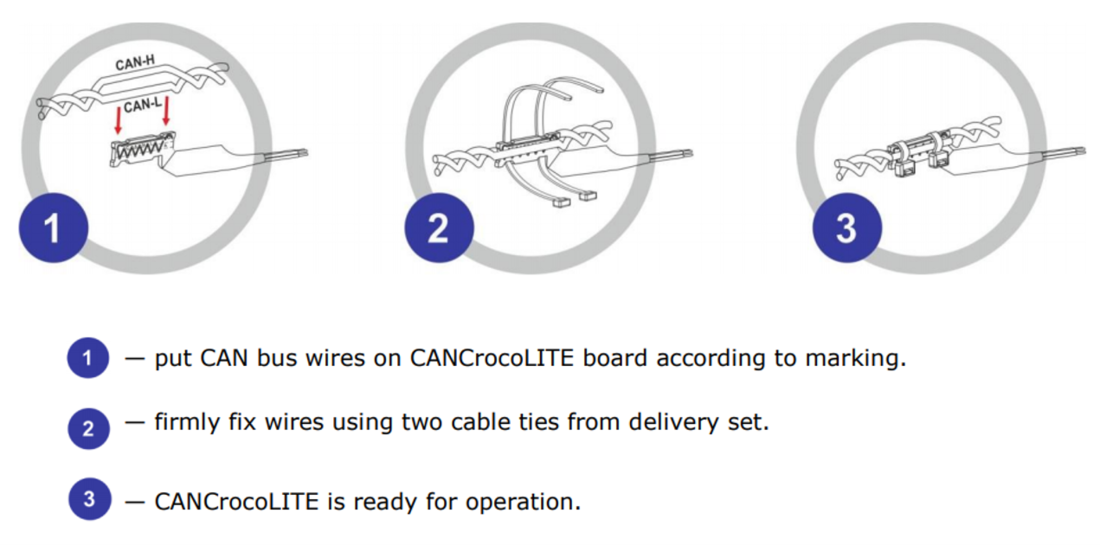
The CAN CrocoLITE CAN Bus Interface provides a quick and convenient way of tapping onto a CAN Bus when recording vehicle signals using Racelogic data logging systems. Using an innovative clip-on design, it eliminates the need to hard-wire directly onto the CAN Bus and can be easily fitted by most users.
Available unterminated, or with Mini-Din, Lemo or D Type connectors, the RLACS305 is suitable for use with most Racelogic systems.
Key features
Reads CAN signals through wires insulation without interfering into its integrity.
Zero impact on the electronic and electrical equipment of the vehicle.
One cable fits all vehicles / equipment.
Compact open-frame design allows handy connection to the wires of CAN bus even in the most hard-to-reach places of a car.
No intrusive signals can be transferred to the vehicle CAN bus.
Powered from vehicle’s onboard power supply - does not require an additional equipment (power supply unit).
Protected against reverse polarity.
Easy to install and operate.
Connection
Wires
Marking
Colour
Function
VBAT
Orange
Voltage from 10–50 V
GND
Brown
CANH
Blue
CAN High
CANL
White
CAN Low
Versions
Product Code
Description
Compatability
RLACS305-D
Unterminated CAN CrocoLITE CAN Bus Interface
RLACS305-D
CAN CrocoLITE CAN Bus Interface with 9 way D-Type connector
RLACS305-L
CAN CrocoLITE CAN Bus Interface with 5 way Lemo Plug
For use with allVBOXunits andVideo VBOX Pro
RLACS305-M
CAN CrocoLITE CAN Bus Interface with 6 way Mini DIN Plug
For use withVideo VBOX Lite
Technical Specification
Electrical
Input voltage range
9 – 36 V DC Note: Check VBOX Voltage Range!
Consumption
50 mA
CAN High / CAN Low
Normal input range: 0 – 5 VCommon input range: 7–12 VFailsafe input voltage: 40 V
Environmental and Physical
Size (without cable)
85 mm x 22 mm (l x w)
Weight
50 g
Cable length
1.5 m
Operating Temperature
-40°C to +85°C
Conformity
SAE J1939
Recommended practice for serial control and communications vehicle network
CAN Open
Communication protocol and device profile specification for embedded systems used in automation
DeviceNet
Network protocol used in the automation industry to interconnect control devices for data exchange
NMEA 2000
Standardised as IEC 61162-3, a plug-and-play communications standard used for connecting marine sensors and display units within ships and boats
We use cookies to ensure the Support Centre functions correctly and to understand how it is used so we can improve it.
We use analytics tools, including Google Analytics, which require your consent.
You can accept or reject analytics cookies. Essential cookies are always enabled.